Home › Crystal Dictionary › Celestite
Celestite: Meaning, History & Properties
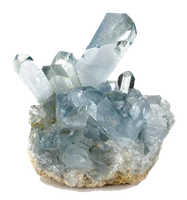
Quick answer: Celestite is a soft sky-blue stone linked to peace, calm and gentle communication. It is traditionally linked with the Throat Chakra.
Celestite meaning
A soft sky-blue stone linked to peace, calm and gentle communication. Often called a stone of heavenly calm, it is traditionally used to ease worry and speak gently.
Common keywords for Celestite are peace, calm, communication, serenity, softness. These meanings come from metaphysical tradition and are not medical or scientific claims.
History of Celestite
Celestite gets its name from the Latin “caelestis,” meaning heavenly, for its pale blue color. It was named in the late 1700s, and today it is best known as sparkling blue clusters from Madagascar.
How Celestite is made
Celestite is strontium sulfate. It forms in sedimentary rocks, especially limestone and dolostone, where mineral-rich water leaves crystals inside cavities. Its blue color is usually pale. Major sources include Madagascar, Sicily and Ohio.
Celestite and the Chakras
Celestite is traditionally linked with the Throat Chakra. Take the Chakra quiz to see which energy center to focus on.
Shop Celestite
Browse Celestite on Amazon in the styles people shop most:
CrystalTumbled stonesBraceletsRaw stones
Frequently asked questions
What does Celestite mean?
A soft sky-blue stone linked to peace, calm and gentle communication. Often called a stone of heavenly calm, it is traditionally used to ease worry and speak gently.
Which Chakra is Celestite connected to?
Celestite is traditionally connected with the Throat Chakra.
Which zodiac signs are paired with Celestite?
Celestite is not tied to one zodiac sign, but you can use it with any sign that shares its Chakra.
How is Celestite formed?
Celestite is strontium sulfate. It forms in sedimentary rocks, especially limestone and dolostone, where mineral-rich water leaves crystals inside cavities. Its blue color is usually pale. Major sources include Madagascar, Sicily and Ohio.
What is the history of Celestite?
Celestite gets its name from the Latin “caelestis,” meaning heavenly, for its pale blue color. It was named in the late 1700s, and today it is best known as sparkling blue clusters from Madagascar.
Related crystals
More: Crystal Dictionary A–Z · Crystals for the new moon · The four zodiac elements